

Data Center Cooling: 4 Essential Strategies for Enhanced Efficiency
In the quest to balance cost efficiency and eco-friendliness, data centers present a unique opportunity where these goals align seamlessly. As energy costs and the demands on data centers grow, refining cooling strategies becomes crucial. By employing best practices, you can boost your data center’s cooling performance and set the stage for sustainable future operations.
Ensure Your Data Center Is Properly Sealed
Sealing your data center is vital; it forms the cornerstone of any effective cooling strategy. Inadequate sealing can lead to air leaks and unwanted humidity, compromising efficiency. Here’s how to ensure a proper seal:
- Always keep doors closed to maintain environmental control.
- Implement a vapor seal with materials like plastic film, vapor-retardant paint, and vinyl coverings. This cost-effective method manages the center’s atmosphere efficiently.
- Seal any gaps around pipes and cables entering through walls or flooring.
- Conduct a professional data center assessment to identify and fix sealing issues.
Design a Hot and Cold Aisle Configuration
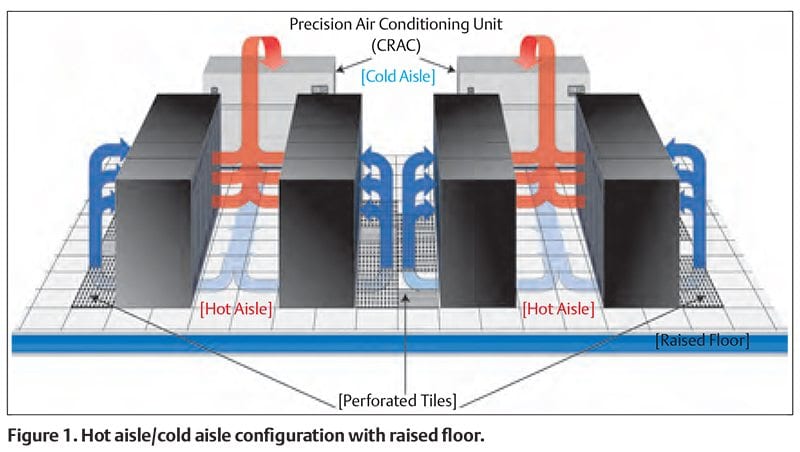 By aligning racks to create a hot-aisle/cold-aisle setup, you enhance airflow and elevate the performance of precision air conditioners (CRAC units). This setup ensures optimal heat dissipation with minimal energy intake.
Arrange racks to face each other, drawing in air from the cold aisle and expelling hot air to form a dedicated hot aisle. Position CRAC units perpendicularly to the hot aisles to boost return air temperature, enhancing unit efficiency.
Implement Aisle Containment Solutions
After establishing a hot-aisle/cold-aisle configuration, the next step is implementing aisle containment to prevent intermingling of hot and cold air. Containment involves using panels and doors to isolate aisles, thereby optimizing cooling capacity and energy efficiency. This simple and affordable solution can be applied even with raised-floor setups.
Enhancing cooling capacity by sealing aisles allows for the management of higher heat loads per rack. For more on Cold Aisle Containment, refer to our detailed white paper.
Adopt Intelligent Control Systems
High-efficiency systems like the Liebert DSE employ intelligent controls to optimize cooling operations, substantially cutting down on energy usage. These systems boast up to 70% greater efficiency than traditional methods, utilizing dynamic fan and compressor controls to direct cooling where most needed.
Incorporating Liebert iCOM systems allows independent operation of compressors and fans, aligning them precisely with IT load requirements to prevent unnecessary cooling and conserve energy.
Partner with Bud Griffin and Associates for Expert Guidance
As the complexities of data center management increase, focusing on energy reduction becomes paramount. Embracing the straightforward strategies we’ve outlined can significantly curb cooling-related energy use and help your organization meet sustainability objectives.
At Bud Griffin and Associates, we’re committed to helping you devise and implement a tailored plan to lower energy consumption effectively. Most organizations find that minor adjustments and strategic investments yield substantial energy savings. Connect with us today to explore how we can assist in achieving a greener future for your data center.
Join our community by signing up for the Bud Griffin and Associates newsletter. Stay informed with the latest insights and tips on data center cooling and energy efficiency strategies.
Frequently Asked Questions
What is the importance of data center cooling?
Data center cooling is critical to maintaining optimal operational efficiency and reducing energy costs. Proper cooling strategies prevent hardware overheating, safeguard performance, and minimize energy consumption.
How can sealing a data center improve cooling efficiency?
Sealing a data center properly helps maintain controlled environments by preventing air leaks and humidity, which can compromise cooling efficiency. Using vapor seals and addressing gaps around infrastructure enhances overall cooling performance.
What role does aisle containment play in data center cooling?
Aisle containment prevents the mixing of hot and cold air, thereby improving cooling capacity and energy efficiency. It helps manage higher heat loads per rack and is a simple, cost-effective solution for optimizing data center cooling.